by Philip Mitchell
09 November 2023
Tiger Intears believes he dropped his pack of sugar free spearmints. The 27-year-old writer glances out of the window of the tiny coffee shop we are in to survey the area. He tries to capture the attention of a possible suspect: Julia, a friend of his who spent the morning walking around with us here in Providence. It’s a chilly November day and Intears, who has just got in to Rhode Island late last month, is having a great time. There is a huge smile on his face as he empties the pockets of the hand-me-down olive-green coat he is wearing, his way of signalling to Julia that his spearmints are gone. Julia mouths What? from outside, and then walks inside the cafe, leans in, stares at Intears, and asks What?
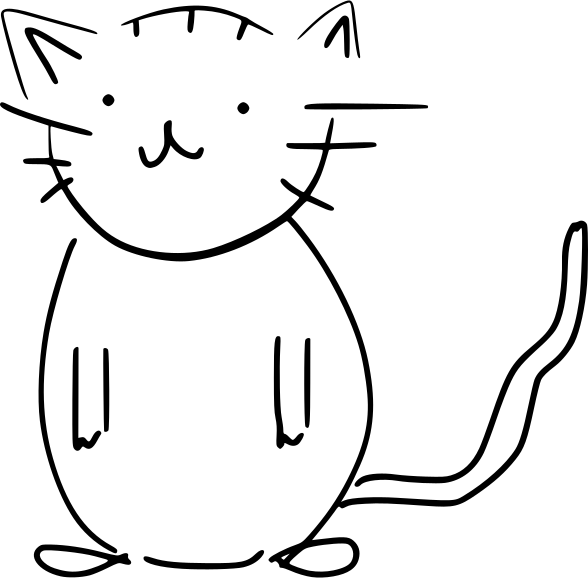
The back-and-forth is suddenly interrupted when Intears’ name is called and a stranger approaches the paper cup sitting on the counter. Intears gives out a hushed “I think she said Tiger,” and Julia, with a mint in her mouth, assures him that she has no clue where he left the pack. “Did you say Tucker?” the man by the counter inquires as he looks at a figure on the cup he is holding: it is a rushed drawing of a large cat with a ” :) ” right next to it. The barista casually shakes her head, looking almost offended at the idea that she might not have enunciated clearly. “Double espresso for Tiger.”
Intears and his friend, Julia Gracie-Holland, a journalist who covers music and internet-based art scenes, met in the summer of 2019. At first, there were plans for a collaborative release between the two, a “strange” (Julia’s words) two-part book titled Ricochet about the works and legacies of Kevin Shields and Dylan Rieder. When a wintertime hospital stay for Intears halted this project, his attention turned inward. “I had a lot to express and I really wanted to put it all down in writing,” he says. “That’s when Julia showed interest in documenting my new approach through interviews and conversations.” By mid-2020 he was ready to publish his first book, with contributions from Julia and (supposedly) from a renowned writer whose name Intears is not willing to divulge in public, before another hospitalization happened. This was followed by a third hospitalization immediately after, which meant that Ricochet and the 2020 piece ended up being shelved indefinitely.
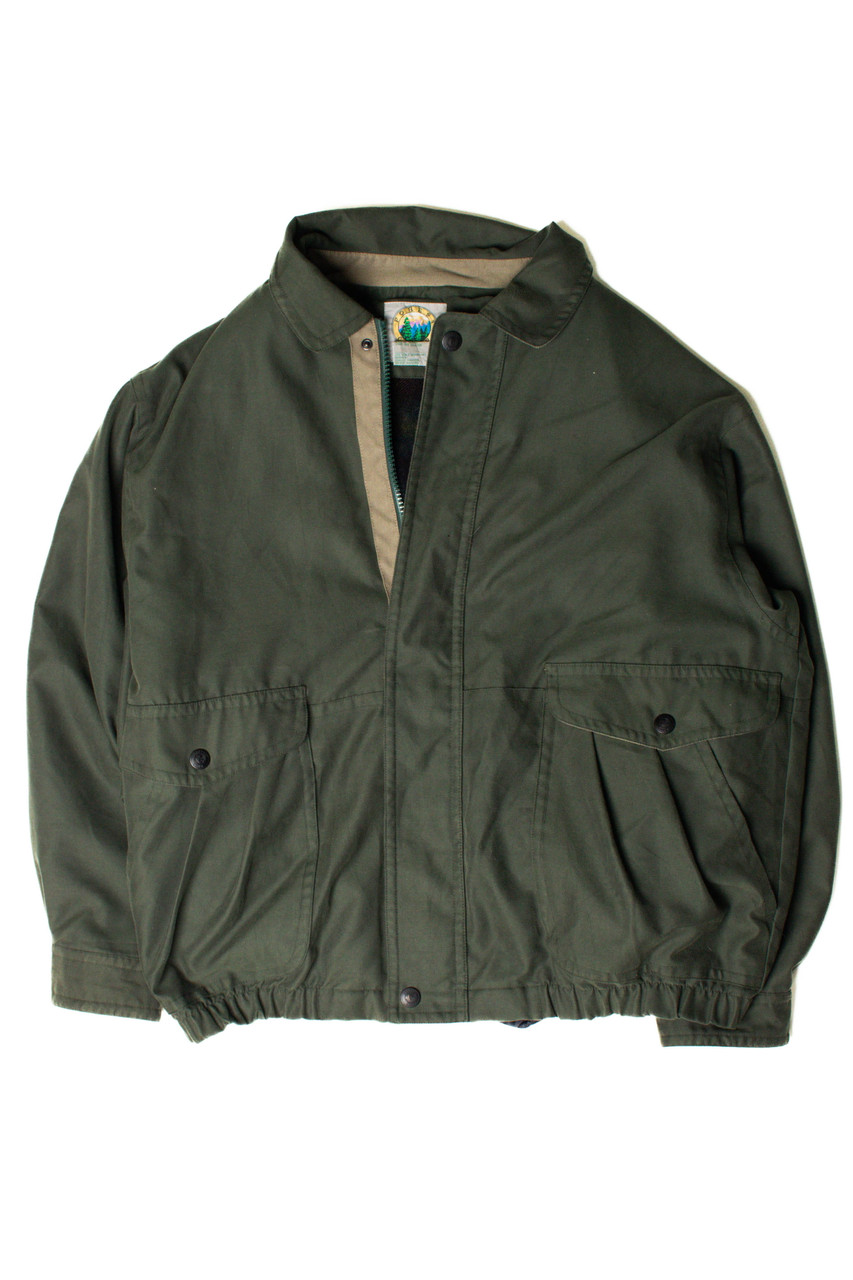
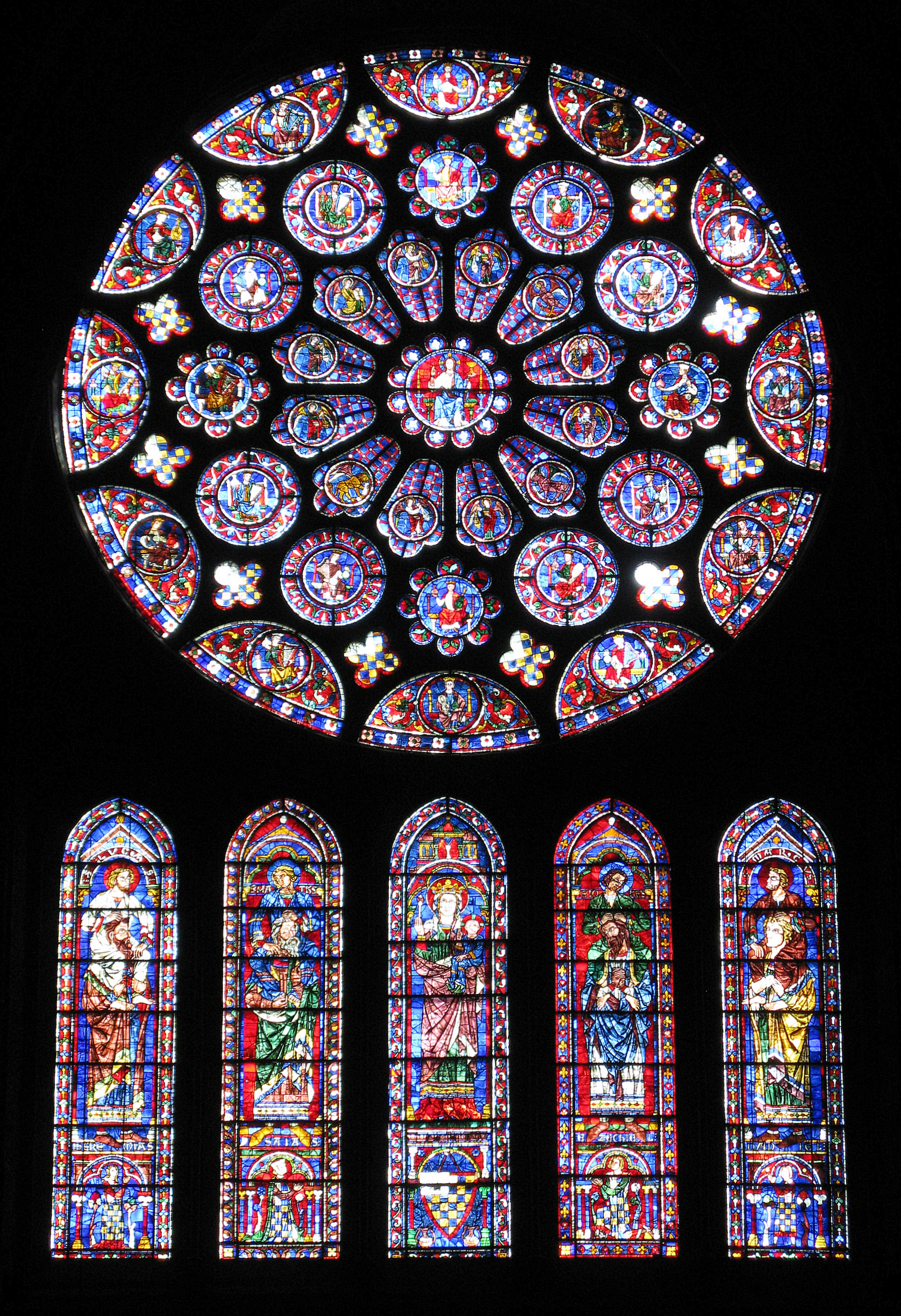
Three years later, Tiger Intears is finally ready to be found, with the release of his debut essay ”Stained Glass Sincerity” serving as evidence of a once unseen journey. At the core of the piece is the poem “Story” by Eileen Myles, a figure that, like many others, ends up being a refrain throughout the text. At points the connections are being made in real-time, like the beguiling section on tennis. Elsewhere the assemblage-forming approach of Intears appears more premeditated. “My late father used to love jigsaw puzzles,” he tells me as the three of us leave Tucker and the nonchalant barista behind to continue on our walk. “The more I grow the more I realize what I do is just a different manifestation of things he was fascinated by when I was a child.”
Two of the repeated motifs in “Stained Glass Sincerity” are Jesus and coins (“Christ on a coin” is how the essay begins). The themes and imagery in the writing seem to invite an age-old spiritual reading of the text, but Intears asserts that his concerns are more contemporary and immediate: “It really is just my take on processing heartbreak and letting all sorts of associations come through.”
Intears’s reluctance to talk about his hospitalizations is an update to his personality, Julia tells me. “A huge update.” Any discussion that drifts into the subject of his life in 2019 and 2020—things that he openly discussed in the past—is instantly shut down. He dismisses it—“I’m just not there anymore”—and starts talking about Zone 2 cardio, before suddenly laughing: “I guess all this health talk isn’t proving my point.”
Intears maintains that he is “just trying to get better at learning how to move on and not get stuck at every turn, especially not to let others reduce me to some label” which echoes something he writes in “Stained Glass Sincerity”: “I cannot imagine a more terrible death than becoming fixed.” Isn’t there a forthcoming collection of old essays, though? It’ll be a balance, “I want to be graceful and honest and true-to-life but also give myself some pockets of freedom” is what he says. Intears knows that he is starting to sound elusive. “I wish I could give eloquent answers but I just try to do things that make me sleep well at night, and I know that dishonesty or compromise is a highway to wakefulness,” he says and then smiles.
Tiger Intears’s earliest piece of creative writing that he shared with friends was a poem about his father’s passing, which he sent to “everyone” because, he coolly remarks, “I had this naive sort of confidence that one has in the early stages of any pursuit.” As a college student in the mid-2010s, he shifted his focus to more experimental forms of artmaking, from erasure writing to digital art and even the occasional performance piece. (Julia Gracie-Holland brings up the artistic lineage that connects Intears to Allan Kaprow and John Cage by way of one of his teachers, but he insists that he doesn’t overthink this historical association.) By 2019, he had started to think exclusively in terms of nonfiction writing and “its edges” and started to draw inspiration from the wonky writing style of Julia, who publishes her work anonymously online.
Despite polishing his craft over the past five years, hallmarks of his style are apparent in all of his early nonfiction works: his energetic shifting of gears within the same piece, creating a hectic landscape in the process; an affection for incorporating an eclectic selection of voices and individuals, from medieval philosophers to cloud rap musicians to professional wrestlers; and a confident pacing that obsessively repeats and repeats with remarkable intensity, as influenced by the Austrian writer Thomas Bernhard. “After I stopped seeing [repetition] as something to be corrected,” he says, “I told myself, it’s over, I’m running away with this.”
Intears resists talking about where he’s from. On his website, bright green hyperlinks run the town, with names of people and artworks loudly jumping out of the page in day mode. But very few, if any, of the biographical pages reveal geographical information about the individuals, and even in his own writing he refuses to label physical locations. If there is any intention behind this, he says, “it is to create a focused space that filters out all unnecessary shit.”
It is impossible not to wonder about the personal implications behind Intears’s decision to do away with such core biographical facts. He tested different names throughout the years, before landing on his current presentation as Tiger Intears, two words that retain no hints of his place of origin. His inclination to uphold a low profile, not share his looks beyond cryptic avatars, and sometimes idealize the privacy of lucha libre wrestlers has made it extremely amusing to hear the strange tidbits of life events that continue to pop up in our conversation. There was the moment in 2015 when footage of him being “a hilariously hopeless driver” went viral. And earlier this year, a group of teenagers filmed him walking near the Lisbon Oceanarium and started yelling “wow Bruno Mars” and “wow Michael Jackson.” Intears, who leans shy, finds it all mostly harmless: “I just wish cameras weren’t involved, but it’s all good fun.”
Pip Mitchell: You’ve mentioned that you’ve always struggled with sharing your creative work publically in a way that feels meaningful. What was different about uploading Stained Glass Sincerity?
Tiger Intears: I just don’t think too much about the ideal presentation anymore. In the past, I had a lot of anxieties about making sure how I see myself matches how my writing is put out to the world, for there to be some sort of cohesion between self-image and social presence. But now, I feel some sort of urgency. If I’m working so hard on my craft and art why not create a home for it?
On a personal level, I finally feel as confident as I was when I first started doing this shit in 2015. It’s healthy to be clueless and delusional sometimes, it’s not good to be retentive—I think there’s a lot of narcissism in retention actually. I’m not interested in grand statements. All I want is to contribute and be part of a conversation. Stepping away from the influence of artistic circles enhanced my sense of personal taste because I was confronted with it on a daily basis, and I didn’t have anyone besides Julia to bounce ideas off of. Tiger from 2021 or even last year would have tried to blend in a bit more, but I now feel like things have clicked inside me and I can’t leave stuff up in the air as much.
Do you think of your website as a place where you can maintain agency and control?
Mostly as a place where I can create a focused environment. Think of the new Scorsese movie: If you go see that in theaters then you are confronted with a filmmaker’s precise vision of what to convey in x amount of time. It’s stupid to bring up that example because watching a movie is no longer the pinnacle of a distraction-free experience but it’s been on my mind. Even though I don’t intend to create something cinematic I’d like to leave very little room for the imagination in my writing.

Your first creative works were poems. What excited you about the format?
Earl Sweatshirt’s style back then floored me. This was around the time he released Solace in 2015 and I just didn’t know you could really make that sort of thing. His unflinching interest in shining some light on the darkest experiences, that was very dear to me. I remember trying to copy his style—[Laughs]—it was a huge failure. Remember when he said “I’m the youngest old man than you know”? I still keep that sentence close.
What prompted you to transition to creating more essayistic pieces?
Prose started feeling like a better mirror for my concerns. When I first read Correction, I felt like a highway opened up in front of me. Thomas Bernhard’s musicality and the long paragraphs really inspired me. Plus the kind of poems Eileen Myles was writing felt like the final form for poetry for me, and I didn’t how to build on that in any convincing way. I began caring more about documentation and direct expression and was drawn towards immediacy over ornamentation. It became necessary for me to get to the point and not just flex my technical skills.
Was your method of writing in Stained Glass Sincerity, the connective style, a return to showing off technique?
Not in any intentional way. My jumping off point was the song “earned” by Organ Tapes. I am fond of the vocal lines that come in and out at the halfway mark of the song. I think it’s great how language plays a secondary role to movement on there—that’s what music does at its best. This is one of those cases where I get uncomfortable the more I talk about it because I feel like it takes away from the experience, but that’s what I was trying to do, to make movement matter more than language. You can find that effect in [Organ Tapes’s] songs and also in the writings of Thomas Bernhard and Eileen Myles.
Recently I started having a strong awareness that moving is all there is. That’s a half-assed attempt at saying something profound, but yeah SGS [Stained Glass Sincerity] is about motion.
How do you arrive at the connections you make?
There might’ve been a time when I forced them. [Laughs]. Like I’d connect two things based on similarities in names or something uninspired and now that just feels too on the nose. If something comes naturally and puts me at ease I keep it. It’s simply putting fragmented pieces together and there isn’t a preconceived idea that I have in mind. I sleep on stuff and if it makes sense the next day it stays. And so on.
I’ve received comments before about my skills, and that’s always nice of course, but really I don’t—it’s not that important. I want my writing to connect on an emotional level, that’s why I care about haptic and touch and whatnot. I’m chasing a feeling and nothing more.
That emotional experience you are searching for makes sense given the artists you evoke. But I wonder if the format of your presentation detracts from the sort of connection you are after. The website looks like a Wikipedia page and I don’t immediately think of that as necessarily soulful or nourishing.
I find hyperlinks to be something divine. There at times where I just stare at the color palette of the site and I get a warm feeling because I know I finally found a tone that matches how I visualize and think about my writing. Wikipedia, yeah, sure, it’s there of course, I get it, but I don’t think I can say anything worthwhile about that. There are times where I wish all the words on my site would turn to blur and it would just be the color effect. So if all a person gets from visiting the site is a visual encounter, that’s great. Language doesn’t last long, not as long as feelings and encounters. But I know people are going to expect the words to be the main course. I’m okay with that, and I really do care about the writing. And I guess it’s always shocking when someone else cares too.

You were intensely private about your work in the past. How do you anticipate the next year to look like?
I want to get that RXK Nephew work ethic. I don’t know how likely it is for me to be uploading stuff insanely regularly but I fully believe there’s strength in abundance. Maybe the urgency will fade. I’ve developed a strong intuition around timing and knowing when to let go of something I worked on. The only difference now is instead of just bothering Julia all the time I’ve got this quiet place for the work to exist and, hopefully, thrive.
On the frontpage of your site there’s a link to an unreleased Bob Dylan song. Tell me a bit about that.
“I Can’t Leave Her Behind” is the artistic ideal, which is maybe odd to hear me say, but the calm is dear to me. When I discovered the [Dylan] clip in 2019, I was so exhausted because of my illness and the serenity in the recording meant the world. I see unreleased works as very precious things—all the stuff artists keep behind and hold off on releasing for whatever reason. I’d like get closer to that calm ideal—to the feel of a painting like Trinity—one day. I know it sounds grandiose, but let me roll with it, [Laughs]. They don’t teach you how to be so sure of yourself in school so we have to work extra hard at arriving at a place of unbearable confidence as artists, to stand upright and say, you know, this is me.
You mention the Rublev painting Trinity and it’s impossible to ignore the many Christian themes in Stained Glass Sincerity. It feels like there’s a strong tradition your stuff fits into.
It’s there for sure but I’m not a Christian if that’s what you’re asking. He painted crucifixion works, but Francis Bacon wasn’t a Christian either. Tradition is funny. I’m creating impressions of a world that I picked up through osmosis. That’s the way I see it, and if people find it too serious, it’s okay, the world is full. I just—I feel we’ve got to give one another the benefit of the doubt more often, that we should collectively take a step back and relearn how to support one another. If you find heaven in a Van Gogh painting because he is art royalty but absolutely no value in a Natalie song because she’s obscure then you are too slow. That sort of thinking sets us back on a daily basis—every minute really. And we do that shit to our own friends and loved ones all the time.
I was walking by this place called Forward [FWD:Coffee] in London in October of last year and this was sometime after an intense romantic situation that went south and was always going to go south. I was there at that coffee shop just feeling so goddamn sad and not knowing how to get over this and then I noticed there were all these crosses on the wall, it was an art display of some sort, and suddenly there was a surge of intense feeling in me followed by relief. Anyway thanks to that experience I re-downloaded a dating app and started seeing a new girl—
[Laughs] Wow. So the emotional and the spiritual came together to have you get on Tinder again?
Well that [laughs] but also I started being able to write again after a long block. Whenever I complete a piece of writing I think it’s the last one I’ll ever share. And then something happens and I go, Oh. Writing, without it I go crazy. Language doesn’t last a long time, but it’s all I’ve got to work with. Writing, falling in love, and moving—what else is there?